The people, profits and environmental debate behind Sri Lanka’s oil palm industry
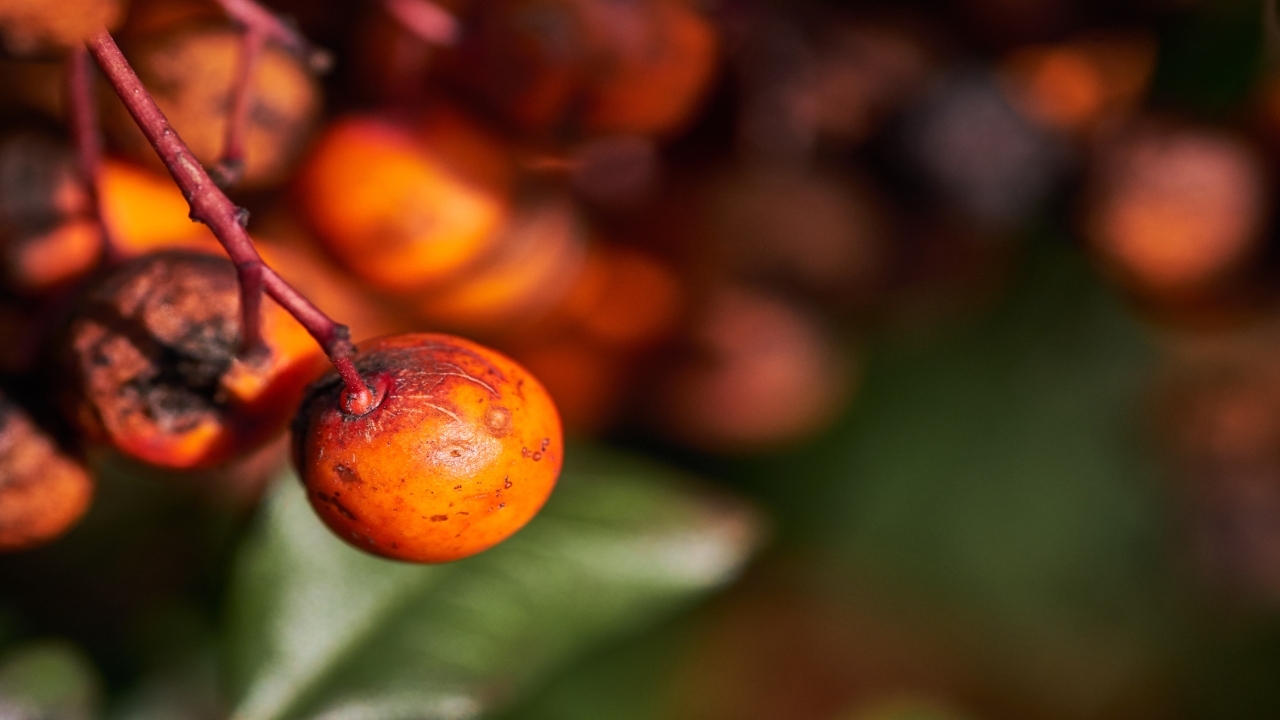
By the time the sun rises over the Nakiyadeniya Estate, the work has already begun. A harvested bunch of oil palm fruit can weigh several kilograms, and for the workers moving between the rows of palms, the crop is not the subject of an environmental argument or a policy debate. It is a job. Yet thousands of people whose incomes are linked to Sri Lanka's oil palm industry now find themselves at the centre of precisely that debate.
During a recent media visit by The Morning Money to the established oil palm plantation at Nakiyadeniya Estate in Sri Lanka’s Southern Province, ground-cover vegetation, understorey plants and compatible crops could be seen growing beneath and between the palms. Water sources were also visible in and around cultivated areas. It is a landscape that complicates a debate that has often been presented in simple terms: oil palm versus the environment.
Moreover, industry proponents argue that oil palm has the potential to generate significantly higher returns than some of Sri Lanka’s traditional plantation crops. However, the environmental concerns surrounding oil palm cannot simply be dismissed. The industry itself acknowledges the need for responsible land selection, soil and water management, biodiversity protection and continuous monitoring.
For the workers, it is a livelihood
Behind the rows of palms are people whose relationship with the crop is considerably more personal than the national debate surrounding it.
According to figures provided by the Palm Oil Industry Association of Sri Lanka (POIA), the plantation and milling sectors generate more than 5,000 jobs and support an estimated 21,000 livelihoods. The association also claimed that a worker in an oil palm plantation earns an average of Rs. 65,000 per month compared with around Rs. 30,000–35,000 for tea and rubber plantation workers.
For plantation communities, that difference matters. An agricultural crop is ultimately measured not only by what it produces per hectare, but by what it puts into the hands of the people working on that land. Higher wages can translate into more disposable income for households and greater spending power within rural communities.
The industry argues that this is one of oil palm’s strongest advantages. Based on current market prices cited by the POIA, the profit margin per hectare is estimated at around Rs. 660,000 for oil palm, compared with approximately Rs. 245,000 for coconut, Rs. 75,000 for tea and Rs. 45,000 for rubber. These figures are industry estimates and are dependent on market conditions, productivity and production costs, but they illustrate why the crop is viewed as economically attractive by its proponents.
There is also the question of labour. Sri Lanka’s plantation sector has long struggled with labour shortages. The POIA argues that oil palm, because of its comparatively high productivity and income-generating potential, can provide an alternative within a sector facing difficulties in attracting and retaining workers. For an industry often discussed through hectares and tonnes, this human dimension can easily disappear. But if cultivation is reduced or plantations are uprooted, the consequences would not necessarily stop at the estate boundary. They could extend to workers, families, suppliers, transporters, mills and other businesses connected to the crop. That is why the question of what happens to existing oil palm cultivation is also a question about livelihoods.
The economics of a controversial crop
The economic argument for oil palm becomes stronger when the discussion moves beyond individual workers. The POIA estimates that the plantation and milling sectors together contribute more than Rs. 11 billion directly and indirectly to Sri Lanka’s GDP, with approximately 60% of this contribution coming from plantations and 40% from milling. It estimates that the plantation sector generates around Rs. 7 billion in revenue.
Oil palm’s appeal is largely rooted in productivity. The crop is regarded by the industry as one of the world’s most economically productive oil crops, generating relatively high returns from a given area of land. For a country attempting to increase agricultural productivity while managing limited land resources, that becomes an important consideration.
There is also the issue of imports. Sri Lanka currently produces approximately 25,000 MT of palm oil annually, according to the POIA. The POIA estimates that this domestic production saves around $27 million annually through import substitution. If domestic production were replaced entirely by imports, it estimates that the annual foreign-exchange requirement could rise by between $32 million and $44 million.
That calculation gives oil palm a significance beyond the plantations themselves.
Every tonne produced locally represents oil that does not have to be sourced from abroad. At a time when Sri Lanka remains conscious of its foreign-exchange position and the vulnerability created by import dependence, domestic production carries an economic value.
But there is another side to the calculation.
The industry estimates that a ban or significant reduction in oil palm cultivation could affect plantation and milling-sector revenue, existing debt, and investment. It also warns that greater reliance on coconut for domestic vegetable-oil requirements could put additional pressure on coconut supplies and potentially affect coconut-based exports.
The argument, therefore, is, Sri Lanka could lose an existing production system, including plantations, mills, employment and investment, while simultaneously becoming more dependent on imported vegetable oils.
But what about the environment?
Globally, oil palm has been associated with some of the most serious environmental controversies surrounding large-scale agriculture. Critics have raised concerns about deforestation, biodiversity loss, water resources and land degradation.
But the plantations visited during the media tour presented a more site-specific picture. Ground-cover and understory vegetation were visible beneath cultivated palms. Estate officers explained that such vegetation, when properly managed, can help protect soil from direct rainfall, reduce erosion and surface runoff, retain moisture and support natural activity.
Areas of underplanting and compatible intercropping were also observed, challenging the assumption that oil palm necessarily means a landscape in which nothing else can grow. Pruned palm fronds were stacked strategically to return organic matter to the soil, while soil and water conservation practices were also being used.
Water is perhaps the most contentious part of the discussion. During the visit, clean water resources were observed within, alongside and beyond cultivation areas. The POIA argues that this challenges the blanket claim that oil palm cultivation automatically causes surrounding wells and streams to dry up.
But this is also where caution is necessary. The existence of water in one plantation does not, by itself, prove that oil palm cultivation has no impact on water availability elsewhere. Hydrology varies according to soil, rainfall, terrain, land management and surrounding land use. Interestingly, the industry itself acknowledges that responsible cultivation requires protection of natural drainage systems, buffer zones along waterways, careful control of fertiliser and agrochemical use, and continuous monitoring of water quality and availability.
Furthermore, earlier freshwater research at the Nakiadeniya and Homadola estates has contributed to the scientific identification of Schistura scripta, commonly known as the Sri Lanka mountain loach, an endemic freshwater fish recorded within the Gin River basin. The POIA uses this as evidence that these landscapes can retain ecological value, particularly where waterways, riparian zones and connected habitats are protected.
This does not mean that oil palm cultivation is automatically environmentally benign, rather, it suggests that environmental outcomes can depend significantly on how and where the crop is cultivated.
POIA Chief Operating Officer Yajith de Silva argued that environmental concerns surrounding plantation crops should be taken seriously, but that conclusions should be based on scientific evidence, site-specific conditions and actual land-management practices rather than myths:
“Environmental concerns surrounding any plantation crop must be taken seriously. However, conclusions should be based on scientific evidence, site-specific conditions and actual land-management practices. The understorey vegetation, compatible crops, functioning water resources and biodiversity observed in the Southern Region demonstrate why broad assumptions cannot replace proper environmental assessment."
The country’s oil palm sector operates within an existing agricultural and plantation landscape, rather than necessarily replicating the large-scale clearing of virgin forests associated with some international cases. The industry argues that international examples cannot simply be transferred to Sri Lanka without considering local conditions.
Beyond the plantation
Walking through an oil palm estate makes one thing clear: the crop is more complicated than the arguments surrounding it. For a plantation worker, it can represent a better-paying job. For an investor or plantation company, it can represent a crop with high productivity. For the wider economy, it can mean domestic production, import substitution and foreign-exchange savings. For an environmentalist, meanwhile, the questions are different: What happens to the soil? Where does the water go? What happens to biodiversity? And so on. None of those questions can simply be ignored.
The industry experts recognise that responsible oil palm cultivation requires appropriate land selection, soil and water management, biodiversity protection, transparent monitoring and strict regulation. It also calls for decisions to be guided by credible data and scientific assessment rather than myths or generalisations. Moreover, Watawala Plantations PLC is certified by RSPO for sustainable oil palm production.
Therefore, instead of asking whether oil palm should simply be labelled an economic opportunity or an environmental threat, the conversation should move towards whether Sri Lanka can establish clear standards under which the crop can exist without sacrificing livelihoods or ecological safeguards. The challenge is finding a model in which one does not have to disappear for the others to survive.