Oil palm as a strategic agricultural asset
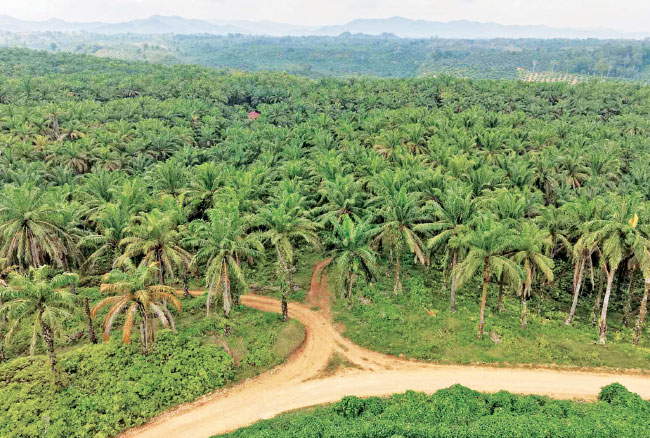
Sri Lanka’s ongoing economic recovery is a tightrope walk, dependent on disciplined fiscal management and, crucially, a pragmatic approach to foreign exchange. Yet, in the heart of our struggling agricultural sector, a self-imposed obstacle remains: the arbitrary 2021 ban on oil palm cultivation. This policy—born of popular environmental fear rather than scientific fact—is costing the nation hundreds of millions of precious US dollars, draining our reserves simply to import the edible oil we could efficiently produce ourselves. It is time for the Government to follow the recommendations of its own expert committees and replace populism with economic sense.
The economics are stark, and the urgency is undeniable. Sri Lanka’s annual requirement for edible oils and fats hovers between 220,000 and 250,000 metric tonnes. Our domestic production, dominated by the much-loved but comparatively low-yielding coconut, satisfies less than one-third of this demand. The deficit is bridged entirely through imports, primarily palm oil and its derivatives, leading to an import bill that exceeded US$300 million in 2023. We are literally haemorrhaging foreign exchange to purchase a commodity that thrives in our wet zone, a climate already hosting our existing plantation infrastructure.
The decision to prohibit new planting and mandate the gradual uprooting of existing plantations—which currently span a mere 11,000 to 12,000 hectares—is an act of profound fiscal illogic. When successive governments previously sanctioned a target of 20,000 hectares, they were responding to a fundamental reality: oil palm is globally the most land-efficient oilseed crop.
Oil Palm Yields
The yield disparity is the central, unassailable argument. On average, a hectare of oil palm yields between four to eight metric tonnes of oil annually. Contrast this with the modest 0.8 metric tonnes produced by a hectare of coconut. To meet Sri Lanka’s full edible oil requirement using only coconut, we would need to dedicate nearly a million hectares of land—an area far exceeding our available suitable agricultural terrain. The alternative, expanding oil palm to the proposed 20,000 hectares, would allow us to cater to nearly half of the national demand on a tiny fraction of the land base. This land-saving efficiency is the key to unlocking significant cost savings, boosting rural employment, and creating a stable, domestically sourced edible oil supply.
Critics of oil palm often invoke images of deforestation seen in Southeast Asia. This comparison is disingenuous. The Sri Lankan industry has strictly adhered to replanting on marginal, degraded land—primarily worn-out rubber estates in the wet zone. There is a rigid legal prohibition on clearing natural forests for this purpose. Furthermore, scientific studies conducted in Sri Lanka directly refute the popular environmental myths. Research confirms that oil palm plantations are highly efficient carbon sinks, sequestering carbon dioxide at a rate (11–16.3 MT per hectare per year) significantly higher than traditional tea and coconut plantations. Claims regarding water depletion are often simplistic, failing to account for the efficiency of the crop’s root system in utilising rainwater compared to the area-based consumption of other plantation crops.
Strategic Commodity
The most recent development—the reported recommendation by the Ministry of Plantation Industries’ Expert Committee to lift the ban—offers a ray of hope. It signals a move away from political posturing and towards evidence-based governance.
We cannot afford to remain the world’s only nation that bans the cultivation of a strategic commodity while simultaneously being one of its biggest importers. The current ban has not saved the environment; it has merely outsourced our production to Malaysia and Indonesia, increased our national debt, and crippled local investments worth billions of rupees.
The mandate for the Government is clear: immediately scrap the ill-conceived 2021 ban, enforce the proven, strict guidelines set by the Coconut Research Institute for planting only on suitable, existing plantation land, and allow the industry to meet the long-approved target of 20,000 hectares. Sri Lanka’s economic recovery hinges on pragmatic decisions that bridge the gap between imported necessity and local capability. The oil palm represents a vital opportunity for self-sufficiency that we can no longer afford to ignore.