Experts and envoys urge Sri Lanka to reverse ‘unscientific’ ban on oil palm replanting
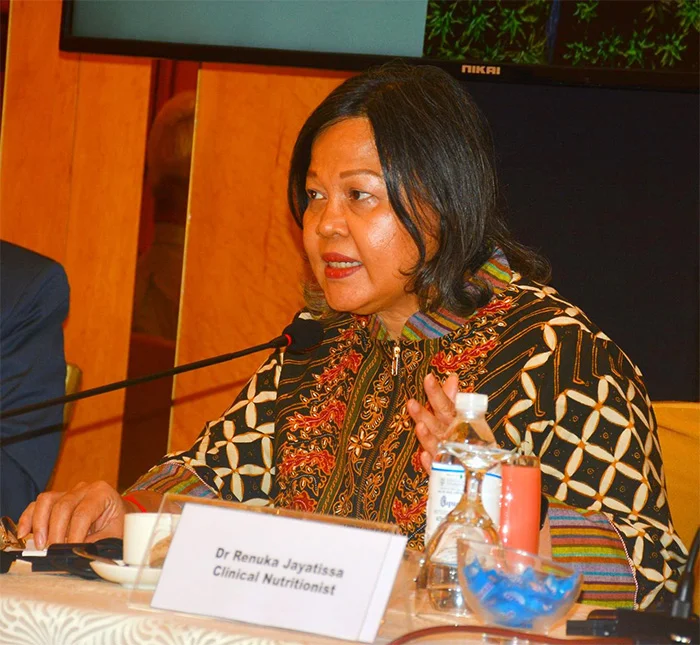
Indonesia’s Ambassador to Sri Lanka, Dewi Gustina Tobing
Agricultural experts and smallholders called for Sri Lanka to lift its unique global ban on oil palm replanting, labelling the prohibition as lacking scientific justification during a forum held in Colombo last week.
The event highlighted that Sri Lanka stands alone worldwide in enforcing such a ban. Speakers argued that oil palm is a high-yield, low-cost crop that could revitalize rural economies, particularly for families facing declining rubber yields and an acute shortage of work opportunities in rubber estates.
“Allowing smallholders to plant even a few oil palm trees alongside tea and rubber would significantly improve village incomes,” said Wijesinghe, Chairman of the Haritha Oil Palm Association.
The forum drew international perspectives to bolster its case. Indonesia’s Ambassador to Sri Lanka, Dewi Gustina Tobing, the chief guest, shared that her country overcame similar ideological concerns to become the world’s leading palm oil producer. She criticized Europe for perpetuating the notion that palm oil causes environmental and social harm, urging an impartial evaluation of its suitability for Asia and Africa and its role in meeting global food and biofuel needs. “Indonesia would welcome Sri Lanka becoming an oil palm producer, not just a buyer,” she stated.
The discussion was further contextualized by the success of Malaysia, the world’s second-largest palm oil producer. Alongside Indonesia, Malaysia has pioneered the Malaysian Sustainable Palm Oil (MSPO) certification scheme, demonstrating that production can be scaled responsibly. The Malaysian model, which actively includes hundreds of thousands of smallholders in its sustainable certification framework, was presented as a viable blueprint for Sri Lanka to emulate, balancing productivity with environmental stewardship.
Solidaridad Asia Managing Director, Dr. Shatadru Chattopadhayay, echoed the need for a science-based approach. He emphasized that palm oil efficiently meets the rising global demand for edible oils, delivering higher yields per hectare at a lower cost compared to other oil crops, provided environmental factors are well managed.
The forum, organized by Solidaridad Asia and the Nucleus Foundation and attended by environmentalists, economists, and agricultural researchers, concluded that the current ban is an outdated measure. The consensus was that Sri Lanka should instead adopt modern, sustainable policies learned from regional leaders like Indonesia and Malaysia to unlock the crop’s potential for its rural smallholders.
By Sanath Nanayakkare