Losing millions in silence: Why Sri Lanka must lift palm oil ban now
10 Nov 2025 |
The Planters’ Association of Ceylon (PA) is urging the government to act swiftly to lift the ban on oil palm cultivation, warning that with each passing day, the losses to the nation keep growing.
The PA noted that an estimated amount of over US $ 175 million has been spent on edible oil imports between 2021 and 2025 when the ban on oil palm cultivation first commenced in April 2021.
The association noted that Sri Lanka continues to spend exorbitant sums on foreign exchange for edible oil imports that could have been substantially offset by local production. Once positioned as a key pillar in the nation’s crop diversification strategy, the abrupt policy reversal in 2021 has stalled progress toward edible oil self-sufficiency and dealt a setback to Sri Lanka’s broader economic recovery.
Palm oil cultivation was first introduced to Sri Lanka in 1968 but only began to gain traction in the early 2000s when the Regional Plantation Companies (RPCs) sought alternatives to loss-making rubber. Recognising the crop’s immense potential, the government at the time promised to extend tax concessions for the establishment of new oil palm cultivation in 2009 and even formally endorsed expansion up to 20,000 hectares by 2016.
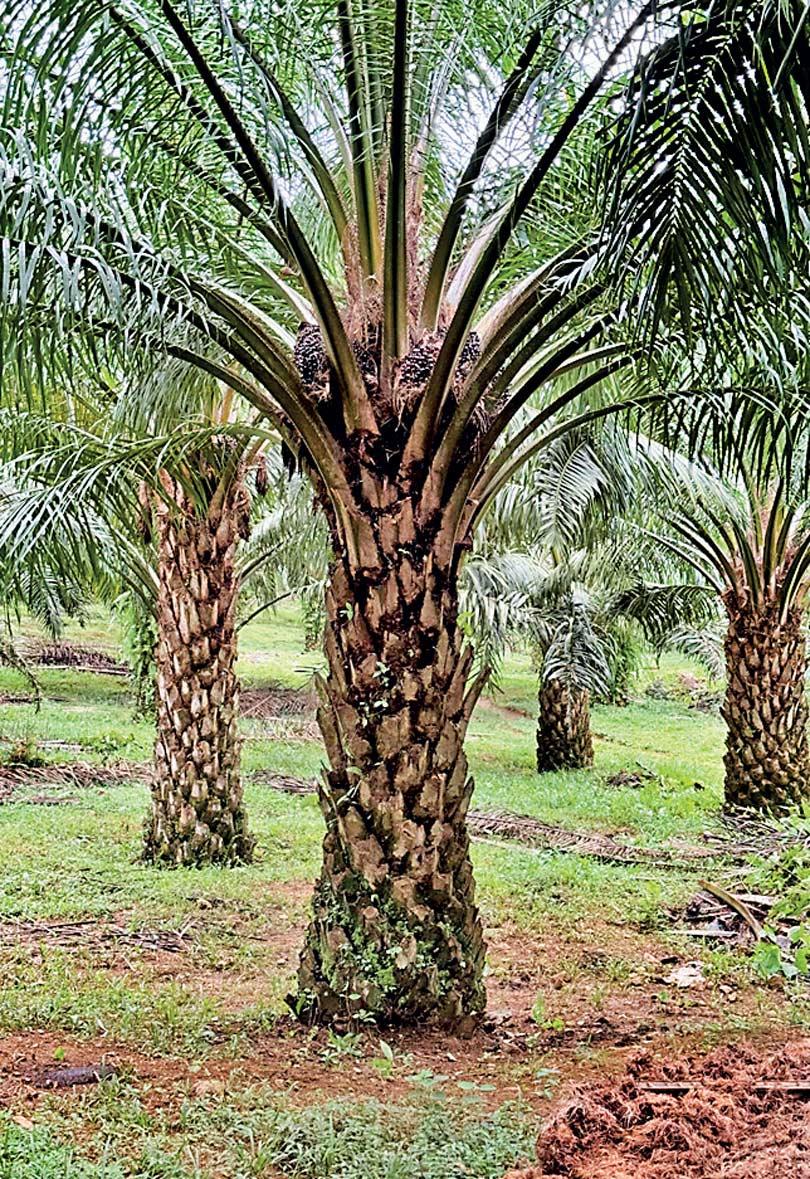
Sri Lanka’s annual edible fat and oil requirement stands at approximately 264,000 metric tonnes. Yet, local production meets barely a quarter of this demand, forcing the country to depend heavily on imports.
The result is a recurring foreign exchange drain estimated at around US $ 35 million annually, with cumulative losses already surpassing US $ 175 million since the ban was imposed.
Before 2021, local production of palm oil supplied a significant share of the domestic requirement, providing a cheaper and more efficient alternative to imported edible oils. Now, despite the ban, palm oil and related fats continue to enter the market under special import licences, which means Sri Lanka is paying foreign suppliers for products it could easily produce at home.
The RPCs have long argued that oil palm offered the most sustainable route to strengthen Sri Lanka’s plantation economy, diversify income streams and conserve foreign exchange. Palm oil yields three to eight times more oil per hectare compared to traditional oil crops such as coconut or soybean, using less land and fewer inputs. With the right policies in place, Sri Lanka could have achieved near self-sufficiency in edible oils, saving billions in import expenditure while generating new rural employment as well. Instead, the ban has left the sector in limbo, with crippling investments and triggering a chain reaction across multiple industries that depend on affordable edible fats.
Millions lost to imported saplings left unused
Before the policy reversal, the government itself recognised palm oil’s economic promise. In 2009, hybrid seed imports were granted tax concessions and the Rubber Research Institute was tasked with developing local cultivation technology. By 2016, the state had formally endorsed an expansion of up to 20,000 hectares, limited to marginal and degraded lands to avoid any environmental harm. Encouraged by these clear policy signals, leading plantation companies, including Watawala, Namunukula, Elpitiya, Horana and Malwatte Valley, invested billions in nurseries, mills and research facilities. The total sectoral investment in oil palm cultivation and processing is estimated to exceed Rs.23 billion. However, In April 2021, the government abruptly prohibited further oil palm cultivation and the import of crude palm oil.
According to the PA, the value of seedlings and young plants that had to be written off exceeded Rs.550 million. These were saplings imported at considerable cost, specially bred for Sri Lankan soil and climatic conditions and expected to yield for up to 25 years. Today, those imported saplings lie unused, a clear symbol of policy inconsistency and wasted national wealth.
“The losses from these abandoned nurseries go far beyond what the industry has absorbed,” noted PA Secretary General Lalith Obeyesekere.
“These were imported assets, paid for in foreign currency. The ban means the government is now paying more each year to import edible oils that could have been produced locally. It is time to act with pragmatism and vision,” he added.
“Every day the ban remains in place, the country loses money, opportunities and credibility.”
A ripple effect across industries and rural economies
The sector contributed an estimated Rs.2.5 billion into rural households annually. With the ban, these communities have experienced a sharp decline in incomes, while millers, refiners and downstream manufacturers struggle to manage shortages. The bakery and confectionery industry, valued at over Rs.200 billion, has faced significant price hikes for inputs such as margarine and cooking oil where costs are ultimately passed down to consumers.
More than 5,000 direct jobs and 21,000 dependent livelihoods were tied to the sector, with oil palm workers earning nearly double the wages of their counterparts in tea and rubber. Ironically, environmental concerns are frequently raised to defend the ban, yet global data tells a different story.
Palm oil is the world’s most efficient oil crop, producing 40 percent of the world’s vegetable oil on only 6 percent of cultivated land. Countries like Malaysia, Indonesia and even India have embraced palm oil, pairing cultivation with strict sustainability standards such as RSPO, MSPO and ISPO certifications, along with zero-waste and smallholder inclusion models.
In Sri Lanka, most oil palm expansion took place on old rubber lands that had already reached the end of their productive life, without any deforestation.
Moreover, palm oil’s role in food security and health is often overlooked. Naturally trans-fat-free and rich in antioxidants and vitamin E, it is recognised globally as a healthier alternative to hydrogenated fats. Both the World Health Organisation (WHO) and World Wide Fund for Nature (WWF) have acknowledged that when cultivated responsibly, palm oil remains the most sustainable and scalable solution to the world’s edible oil needs. Substituting with coconut oil undermines a lucrative export industry that earned Rs.63 billion in 2020.
A sustainable future for plantation industry
The reinstatement of oil palm cultivation could immediately lower Sri Lanka’s import expenditure, generate local employment and restore profitability to the plantation industry, that have struggled under the weight of policy uncertainty. It could also enable the government to reposition the plantation sector as a modern, export-driven industry, one capable of supporting smallholders, embracing sustainable standards and attracting new investment.
Sri Lanka can revive its palm oil sector by lifting the ban and adopting sustainability standards, integrating smallholder farmers, reforming import taxation and investing in R&D and traceability systems. India has already moved decisively in this direction, expanding palm oil cultivation by 45 percent in five years with ambitious plans to reach 1.7 million hectares by 2030.
As the PA emphasises, the future of Sri Lanka’s plantation industry lies in adopting forward-looking, evidence-based policies and oil palm represents a viable and sustainable alternative for the sector’s long-term growth.