Oil palm more profitable than tea or rubber – University Don
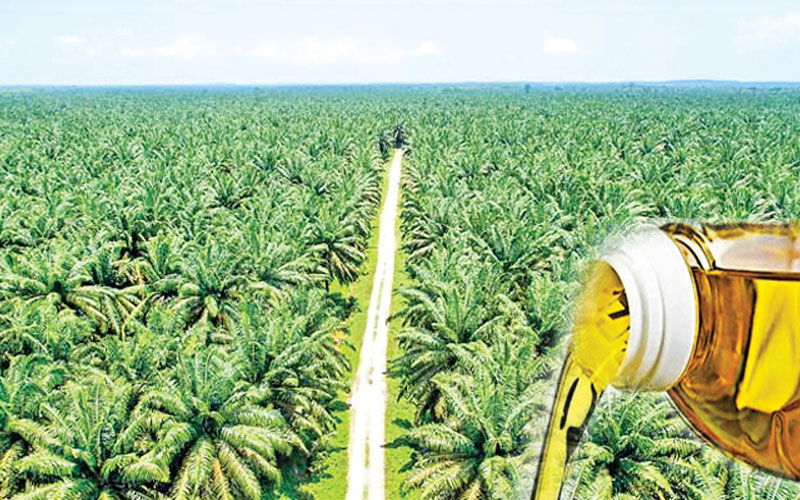
It’s a crying shame to see that the authorities have cold shouldered the oil palm plantations which could not only bring economic wellbeing to agro communities but can also save a huge amount of forex which is drained on import of edible oils, said Director/Agriculture Education Unit, University of Peradeniya, Prof. Buddhi Marambe.
The foreign exchange spent on importing vegetable oil is approximately 65% of the total export earnings from coconut kernel products. He said that though there were several theories that palm oil could damage the environment it is not so. “These are all fears created by pressure groups based on non-scientific evidence.”
He said that hence oil palm cultivation should be permitted again and as it will give a better return. “However, the authorities must ensure that oil palm cultivators do not use forest land for cultivation.”
He said he endorses the move to replace aging rubber or tea plantations with oil palm. This is also not a labour intensive crop and hence a grower can also engage in another business to supplement his income.
Palm oil usage and global demand
Palm oil is the world’s most widely used industrial frying fat used to make cooking oil and frying fat, margarines, shortenings, Vanaspati, bakery fat, palm stearin and palm olein, cereals bars, noodles, potato chips, chocolates, confectionery, and even bio-diesel.
Palm oil is currently the most consumed edible oil in the world. Global edible oil production has increased with a CAGR of around 4% over the past decades. The demand and consumption of palm oil has increased by over 200% over the past three decades.
Palm oil ban
The palm oil cultivation which was egged on by the Government previously suddenly took a u-turn in 2021 when a panel of environmental experts made recommendations from a 2018 report linking oil palm plantations to soil erosion and the drying up of water sources.
Regional Plantation companies had by this time, invested around Rs. 500 million to put up nurseries and today this investment had gone down the drain as these plants are now no use.
Emeritus Professor in the Faculty of Agriculture at Wayamba University, Asoka Nugawela, took issue with the suggestion that oil palm plantations could dry up local water sources. He noted that oil palm in Sri Lanka is generally cultivated in areas where annual rainfall exceeds 3,500 millimeters, while their water requirement is about 1,300 millimeters.
Oil palm industry in Sri Lanka
Sri Lanka’s total edible and non-edible oil requirement stands at 180,000 metric tonnes, while local palm oil production is approximately 25,000–28,000 metric tonnes.

In 2021, over 202,000 metric tonnes of oil were imported at a cost of Rs. 57 billion. If 20,000 hectares of oil palm were cultivated as planned in 2014, 50% of the total edible oil requirement could have been fulfilled locally.
“Economic comparisons reveal that oil palm generates an average profit of Rs. 1,300,000 per hectare per year, outperforming coconut, rubber, and tea,” said Nimal Wijesinghe of HDS.